01
The Secret to Perfect Dough
Combine finely ground Tipo 00 flour, 65% water hydration, sea salt, and a pinch of yeast. A 24-hour slow cold fermentation develops incredible flavor depth and an airy, digestible crumb.
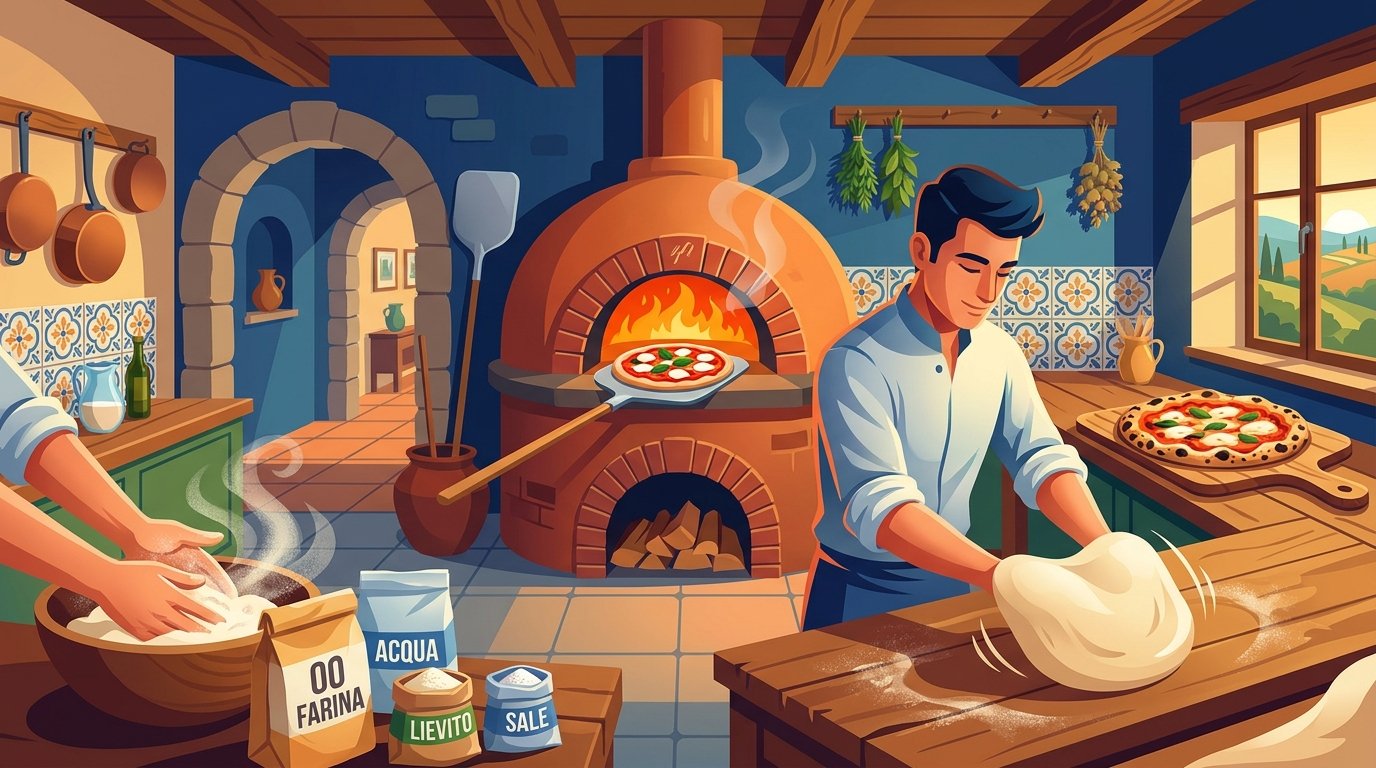
Authentic Italian pizza starts with tipo 00 flour, a well-risen dough, San Marzano tomatoes and serious heat. Watch the visual steps and learn Neapolitan pizza tricks.
Combine finely ground Tipo 00 flour, 65% water hydration, sea salt, and a pinch of yeast. A 24-hour slow cold fermentation develops incredible flavor depth and an airy, digestible crumb.
Hand-crush raw San Marzano tomatoes with sea salt and extra virgin olive oil — never pre-cook the sauce. Top with well-drained fior di latte mozzarella and fresh basil leaves.
Always stretch dough by hand working from the center outward to push trapped air pockets into the rim, creating the iconic puffy Neapolitan cornicione crust without a rolling pin.
In a 450°C (850°F) wood oven, pizza bakes in just 60 to 90 seconds with leopard spotting. At home, max out your oven with a preheated baking steel for crisp results.
Often 8–24 hours cold, or a few hours at room temperature depending on yeast. Longer rises taste better and digest easier.
As hot as possible: home ovens ~250–300°C with stone/steel; authentic wood ovens at 450°C. Short bake time wins.
Yes. Portion into balls after first fermentation, freeze airtight, and thaw slowly in the fridge.
Focaccia is thicker, higher in olive oil, and served as bread. Pizza is stretched thin and baked rapidly with toppings.
Type any question on Focie Explains and get an instant interactive scrollytelling explain in one click.